Wednesday, March 4, 2015

Done-in in Dunedin

The beach at St. Clair is popular with many mammals
We pulled into Dunedin on a crystal clear, sunny summer day. After finding our beach house in the St. Clair neighborhood (I know, they misspelled it) we headed to the beach. Surfers out riding the perfect break, outdoor cafes and people enjoying the day. Picture perfect little beach town. Our plans for exploring this far end of the south island from Dundedin kind of faded away when we realized how sweet it was right here in St. Clair. It was obvious that we were going to be very bad tourists this week.
penguin ponderings
The weather didn't hold of course, it's rather dreary here quite often. Although there are some very good museums in Dunedin, we didn't see them. We did walk through the beautiful old campus of the University of Otago and into the Botanical Gardens, a rather remarkable, large, well-curated botanical garden. Other than that we didn't see much more of the town.
Instead we saw penguins! The nearby, beautiful Otago Peninsula has nesting colonies of the little blue penguin (smallest penguin in the world) and beaches where the solitary yellow-eyed penguins nest. Our first attempt was Sandfly Bay. We dutifully followed the Dept of Conservation instructions on how to approach the beach, where to find the hide to watch them and what not to do. We made our way into the hide and proceeded to watch a great deal of human/sea lion interaction as groups of people walked onto the beach to take pictures of the sea lions. No self-respecting penguin would ever come ashore here. Why didn't these people follow penguin protocol? Struck out.
Earlier that day, a local restaurant owner in the nearby town of Portobello told us about Allan's beach where she's seen both little blues and yellow-eyed penguins. We decided to give that a try the next night. We drove out to the car park and found a beautiful, deserted beach. It was looking good. We found the large rock she mentioned and parked ourselves in front of it as we heard the penguins are near-sighted on land and don't see you. Luckily for us and the penguins, a local fellow came a long who told us to move behind the rock, otherwise they won't come ashore. They have very good land eyesight (can't believe everything you read on the web!). He knew their behavior and told us it's a colony of little blues who come up in rafts of 5-6, lift out of the water and congregate on a flat rock at the waters edge. Then one will make a run for it right by the rock we were behind into the cliffs behind us. By now there were six of us behind this very large rock, it was getting dark and we heard them start vocalizing and could make out the first raft waddling up to the first rock. Sure enough, one made a run for it to the left of the rock, passed very close to us and then waited at the base of the cliff. The others followed. Even in the dusk you could make out their little bodies waddling along, it was so fun to watch. And they are amazing cliff climbers as well. We watched a couple of more rafts come in and called it a night when it was just too dark to see anything.
Crested Fiordland penguins recuperating in the hospital
But that wasn't enough of a penguin fix, we needed to see the larger, more solitary yellow-eyed penguin. We elected to visit a private conservation project called Penguin Place. Their work started on their sheep farm in 1985 where they began restoring habitat, trapping predators and building nesting boxes. As they learned to care for sick penguins, a "hospital" developed and people began sending wounded birds there from around the island. At the time of our visit they had 50 penguins in for rehabilitation including two crested Fiordland penguins that live in remote areas of the very south end of the island. They were brought in starving a few weeks ago, have put on wieght and will be released in about a week back in their normal habitat. In small groups, we then went out on the extensive reserve that stretched out along a beautiful beach. The penguins feed all day and come in at night and the yellow-eyes don't come in together like the little blues but individually. We were lucky enough to see two come up out of the water and travel across the beach and up into the habitat to find their young. I managed to catch this video of one of the determined little trucker as he passed by our hide. It's fledgling time for the birds so the young still rely on their parents for bringing food. The nests are pretty informal so we could see a number of young (almost as big as their parents!) among the bush. It was amazing to see the work these people had done to foster the survival of these endangered birds.
click to expand map
So that was it for being tourists. We rested and relaxed in St. Clair, caught up on life at home and a few movies. Another great thing about this neighborhood: best ever outdoor saltwater pool! Built on the cliff, right by the ocean. Spectacular. A nice ending to our time in New Zealand. It's been a great journey.
We've landed in Brisbane and it's going to be around 104 degrees today. We mailed our cool weather clothes home, we won't need much more than shorts, jandals and swimming costumes where we are heading. We will no doubt miss the cool, cloudy skies of Dunedin as we explore tropical Queensland and the great barrier reef until the end of April.
The beach at Penguin Place

St Clair salt water pool

Saturday, February 28, 2015

Riding the Rail Trail

Big sky country kiwi style

We left Christchurch and headed west and south towards Queenstown. Everyone told us that we had to go to Queenstown and we are not going to Queenstown as it is overrun with tourists celebrating Chinese New Year. Instead, we opted to ride some of the Otaga Rail Trail instead. This is an old railroad line that was decommissioned in the sixties and made into a 150 km bike trail. Like the Tasman Great Taste Trail, it's one of the Great Cycle Trails. It goes through dry farmland with massive rock formations resembling the American west. The whole trail takes about four days, staying in small accommodations along the way. The good folks at Trails Journey dropped us off at the top of the grade and rode back from there, mostly downhill, but it's not a steep grade. Spectacular day. We also rode the Roxburgh Gorge trail and with more time we would have been able to explore the Clutha River trail. Next time: Alps to Ocean Trail!  And maybe Queenstown after that, at a quieter time.


Wildlife encounter on the trail
Best carrot cake ever along the trail at the Station Cafe in Lauder


Friday, February 20, 2015

The Ring of Fire Strikes

The YMCA hosts the Street Art museum, a former stadium transformed. Jeff points to Seattle in the sticker room.
The Catholic Church is in limbo. 
Do you remember the 2011 Christchurch earthquake? I know, neither did I. As a fellow inhabitant of the, ring of fire, I probably should have taken more note of it. Here's a wikipedia link to refresh your memory (if you click on the photo of the church, you will see more images). Sobering.

ReStart: Brining retail back into the central business district
As a tourist, what you see in the central business district are empty buildings, damaged building (like the Catholic Church) and heaps of construction areas. You also notice a certain lack of people and sort of a ghost town feel. Except for the area around the Canterbury Museum, botanical gardens and the fabulous ReStart Mall it's pretty quiet. It's hard to imagine what it was like in the months after the quake and all the work that's been done over the past four years. Many of the city's gothic buildings were permanently damaged, liquefaction caused flooding and major damage, and infrastructure problems. Everyone would have been touched by someone who was either killed or injured during the quake. But what would terrify me was the aftershocks. The wikipedia link above gives a chart of the significant aftershocks that continued for months afterwards. It would take a strong stomach to stick around many people simply left.
Jeff is the speck at the bottom 

The Kiwis are a practical bunch and are turning their heads to the future. It's easy to see that in ten years, Christchurch is going to be an amazing city, one it wouldn't have gotten to without the earthquake. It already is an amazing city. Signs of resilience are all around. The city strives to be the Street Art capital of the world (at least some do!) and new artwork appears on building daily it seems. The new buildings that are state of the art. And who knew you could do so many creative things with containers?
I am so glad we came here, it's inspiring to hear the stories and see the resilience. When the next big one hits us in the US, I am sure we will be drawing on what happened here to learn how to recover.
We arrived in Christchurch by the Transalpine train (Kiwirail) across the south island. Relaxing and spectacular scenery.
New Murals appeared daily while we were here thanks to the Rise Festival
The nearby Banks Peninsula

Monday, February 16, 2015

South by Northwest

Claire Great Taste Trail
We traveled by ferry from Wellington to the South Island through the Marlborough Sounds. The boat leaves windy Wellington Harbor into open ocean, passing through 22.5 kilometers of Cook Strait before entering the intricate, beautiful, and calm water sounds at the tip South Island. The strait was rough enough, even on the huge ferry, couldn't imagine being in the water. There was a plaque on the boat about swimmers who have made the crossing.  The first woman to swim between the north and south island was Lynne Cox, (American) 12 hours and 7 minutes. She battled heavy seas and at one time a ferry pulled alongside to block the wind, flying an American flag to show their support for her effort. A much easier crossing for us and the seas calmed down when we entered the Marlborough Sound channel and we spent the final hour passing by very scenic inlets into the town of Picton. From there we headed to the Tasman region and the small village of Mapua, our home for ten whole days.

Mapua was on the Great Taste Trail, one of the developing New Zealand Great Cycle trails. The government began building trails all over the country about 10 years ago to build a cycling system to rival the Great Walks (think Milford Track). The coastal portion of this track is completed from the town of Nelson west to the Abel Tasman National Park.  We managed three days in on the trail, riding through estuaries, along beaches, through forests and along ridges. It's called the Great Taste for the opportunities to eat and drink along the way... a vicious cycle, eat/ride, eat/ride. A great way to see the country side.

The Abel Tasman Park to the west of Nelson/Mapua and offered some spectacular hiking along the well-worn coastal track. We boated in and out one day to see the middle part of the trail. Lumpy seas made that day a bit rough but it was a beautifully easy way to see more of this beautiful park.
Abel Tasman National Park coastal trail

Take away wine tasting
Our friend Rick at the Wild Ginger in Seattle used his wine connections to get us tastings with two wineries in the famous Marlborough Sound wine region. The first was Forrest, founded by two doctors. Trevor showed us the vineyards and we tasted some great wines with him. They produce 50 different wines with vineyards in the Hawkes Bay and Otago regions as well. Felt like being in a medium-sized Napa winery. The second tasting was quite the opposite, with Jules Taylor wines. It was the most relaxed tasting we have ever experienced. We met George Elsworthy in his office where he'd laid out ten different wines. We talked for almost three hours about travel, New Zealand, Seattle (George had been there many times) and occasionally, wine. By the end of the conversation, I realized that George was actually the very understated owner, being married to the winemaker, Jules Taylor. George sent us home with the open bottles we tasted which we happily managed to finish off over the next couple of days. Don't think that would happen in Napa! Jules and George got their start at Kim Crawford before starting their own project. If you see their wines in the store or on the wine list, give them a go, you won't regret it!
Jeff on the beach at Abel Tasman

We really enjoyed the small community of Mapua, our house was near the wharf and the grocery store so we could make meals or eat at one of the restaurants along the small wharf. Trail Journeys, the bike shop there was awesome and fitted us up for our rides. There was even an Iyengar Yoga teacher at the community center and I really enjoyed getting to practice with kiwis and with a very good teacher.

We left there this morning and drove along the West Coast on a spectacular, sunny day. A rare treat. When we pulled off the road to a nearly deserted beach, a fellow walking his dogs gave us a piece of greenstone. The beach was littered with it, along with what looked like agates and quartz. Tomorrow we catch the TransAlpine train to Christchurch. More from there! xoxo
Mapua Wharf 
The beach off the coastal track in Abel Tasman

Wednesday, February 4, 2015

What's the capital of New Zealand?

Southern Walkway into town.
Wellington. There, now you are ready for when you get hit with that question. We've spent the last week here in what's been called the quirkiest national capital in the world. Our host Gay says it's because of the weather, Wellington's location between these two islands with mountains and open ocean all around makes for quickly changing days with not always the best weather. We've experienced rain, sun and 40 knot winds, off and on the whole time here. Apparently half the year has winds over 32 knots. That kind of weather keeps the cool people here, according to Gay.

Cool has always eluded me but I can verify that these Wellingtonians do seem to be hardy. The city lies in a valley surrounded some quite steep hills. A town greenbelt surrounds it with the beautiful, natural Wellington Harbor out front. Great waterfront with heaps of people riding, walking, running and enjoying. We've enjoyed seeing the botanical gardens, the national museum (Te Papa) along with some great galleries and restaurants.
Seriously windy here...

We've been staying in the Hataitai neighborhood just on the other side of the hill from downtown. Our house clings to the side of the hill and we walk up through winding paths, by walk-in houses, up to Mount Victoria and then down along the Southern Walkway which runs along the ridge and then down through the forest into town. An awesome walk. From our deck we can see the final mountains of the North Island along with all the ferries that head out of Wellington Harbor to the South Island. We'll on that ferry tomorrow, heading for the Nelson area of the South Island, ten days in one place exploring the north end of the southern island of New Zealand.
The view from Mount Victoria towards downtown and the harbor on a rare, clear day. 

Portugal's rugby team working out in the water along the esplanade. The Sevens international rugby tournament begins.
A pose in the nose of an Air New Zealand 737


I think we have some subversives here...


Saturday, January 31, 2015

The Coromandel: Beaches, tractors and volcanoes

Since leaving the Northland we have had a week on the road. Driving in New Zealand is mostly
Our North Island journey 
on two-lane roads, windy and scenic.  The only trick is staying left. Our Kerikeri friend, John Aish used to tell his kids that they made roads in New Zealand too long and had to add lots of curves to use it all up. That explains why we've had so few straight roads.

First stop down the North Island was visiting our Vashon neighbors at Hahei Beach. Becky and Richard Jenke are fabulous hosts and Hahei is a truly remarkable beach on the rugged Coromandel Peninsula. The weather didn't cooperate to get out on the water so we enjoyed long meals and story telling with Becky, Richard and their fantastic neighbors. We worked off the a little of the eating with some beautiful  hikes in the hills, to nearby Cathedral Cove, and the mile-long Hahei Beach.

One heard a fabulous story about a wounded Orca that had a crayfish pot wrapped around his tail. The Jenke's neighbor Russ owns the dive shop so he and his son, Rhys, went out to rescue it. Rhys jumped in the water with his Go Pro camera and cut the rope off the exhausted Orca's tail. He said he didn't worry much about being in the water with this huge mammal until the five other Orcas in the pod came swimming around. Click here to see a good news story and Rhys's video footage of the amazing rescue.

The Hahei locals have an interesting way of launching boats here using old tractors. Richard says some people have a boat just as an excuse to have the tractor. His neighbor Perky has two, big red and little red. It's good clean fun watching people launch and retrieve boats through the surf. Old timers sit by and watch knowing they are going to have to pull out a rookie or two. And then some tractors just make good sunbathing decks as demonstrated below.
Sunbathing Hahei style


Looking back at Hahei from the nearby Pa (fortified Maori village)
From Hahei Beach, we followed Richard's sage advice and headed southwest into the middle of the North Island to National Park. Established in 1887, Tongariro was the first national park in New Zealand and the fourth in the world. It is a dual World Heritage area, a status which recognizes the park's important Maori cultural and spiritual associations as well as outstanding volcanic features. Three mountains dominate the skyline and one was active as recently as 2007. More like two huge craters (much like our Mount St. Helens after it blue) and one remaining intact cone. Our hotel is on the flanks of Mt Ruapehu, the most active. After we check in we notice the room has instructions for what to do in case of a lahar flow. Escaping that kind of event is a bit like a jet aircraft attempting a water landing, highly unlikely chances of survival! Nearby is a perfectly shaped cone of Mt Ngauruhoe and beyond that the crater where Mt Tongariro was blown off a few hundred years ago. Beautiful scenery that was quite different from anything else we'd seen so far and fine hiking in subalpine meadows.
Jeff looking out at cone-shaped Mt Ngauruhoe. Mt Tongariro is the hard to see crater to the left.
We are standing on the flanks of Mt Ruapehu. 


From there we stoped off in Waikanae, a lovely beach area just before Wellington on the Kapiti Coast. Great open beach with not many people on it. We stayed at the Konini Cottage, hosted by the lovely Maggie and Bob Smith. Stop by and see them if you come this way, a wonderful, relaxing place and wonderful hosts. Be sure and try the local ginger beer as well!
The Waikanae beach stretches for five kilometers unobstructed.
After a week on the road, we find ourselves in Wellington, the capital located at the very southern tip of the North Island. It is the hilliest town I have ever seen, even steeper than San Francisco. Nice to be in one place for a week before we catch the ferry to the south island. And lots to see in Wellington, tons of good eateries, coffee, funky shops and walks to check out in the meantime! After all, it is the home of the Flight of the Concords... cheers!
Tractors in use in Waikanae for launching sightseeing boats for the nearby Kapati Island Reserve. 
Jeff and Richard on Hahei Beach after a hike to Cathedral Cove
The wonderful Becky Jenke along the estuary that flows to Hahei Beach


Tuesday, January 27, 2015

The Northland: The geography of isolation

In thinking about how to talk about New Zealand, I find myself coming back to the geography. 
geography. The fact that these islands are in the middle of the South Pacific has meant they are naturally unique. There are plants and birds that exist only here. People didn’t find this place until less than 1000 years ago. First it was the ocean going Polynesians who traveled in canoes over thousands of miles of vast, empty ocean. Followed by the Europeans only a few hundred years ago. If you are interested in learning more, visit this link for short stories and pictures.

We left Auckland and traveled north to explore the Northland and Bay of Islands from the small town of Kerikeri. It’s subtropical here so the mix of plants and fertile volcanic soil creates a beautiful green and lush environment. It’s very hilly with high open grazing areas with cows and sheep. The ocean shows up in almost every backdrop here where the island is narrow and surrounded by what they call the Twin Coasts. Our first day here was a wonderful farmers market reminded me so much of ours at home on Vashon; Small local farms selling everything from homemade yogurt, fresh cheeses and produce to blueberry pancakes and guacamole. We found Russell and Paihia to be rather touristy towns but it is easy to get way from that and onto a fairly remote beach or forest trail.

Ancient kauri tree
In the north, it's easy to see how the large protected bays with scattered islands and rivers flowing in makes it easy to see why people (Polynesians and European) decided to settle here. And it makes for incredibly
beautiful scenery.

There are some stands left of the once prolific Kauri trees with 6+ foot wide trucks and 60+ foot high canopies. These amazing trees were used for Maori canoes. All over these magnificent trees are tropical bromeliads, orchids and epiphytes. It is hard not to stand in awe at these massive living things. 

Our time here in the Northland was enhanced by our connection to Wendy and Lily, who we met in Auckland and who grew up here in Kerikeri. Her parents John and Myrline Aish invited us over to their farm and took us kayaking in Whangaroa Harbor and sight seeing around the peninsula there. Myrline grew up in this area and told us some great stories of the past and Lily, the six year old kept us in the present. Spectacular day!

Cavelli islands out where the Rainbow Warrior was sunk in the 70's... remember that? 
We leave the Northland to navigate back through Auckland to the Coromandal Peninsula where we'll check in with our nieghbors from Vashon, Becky and Richard Jenke. Now it's starting to make sense why they travel here every year for the winter. It might be the longest snowbird migration that I know of but I can't think of many places where the summer is so spectacular.

The Backseat Drivers: Lily D, Claire and Myrlene

Whangaroa Bay 


Saturday, January 17, 2015

The Auckland Report

"A week in Auckland, you'll be bored!" That was our Vashon neighbor Richard's response to our New Zealnd itinerary. "Two days, four max!" he declared. Richard has over 30 years of visiting this country, having taught at the University of Auckland in the 80's and the building a house on the nearby Coromandal Peninsula. He and dear wife, Becky visit ever January and February. Given our way of travel, we weren't too worried about one week in New Zealand's largest city. Here is our report:

Day One: Arrive at 8 AM from Korea. Despite my telling both the Airport Shuttle company and our
Airbnb host that we were arriving at 8PM, the shuttle is there and takes us to our apartment where our host meets us and shows us our new home. Easy. Find essentials like fresh seafood and wine, try not to fall asleep. Wander through Albert Park and marvel at the range of plants/trees here.
Our view over Albert Park across the U. of Auckland

Day Two: Meet Wendy and Lily (friends of our friends Chip and Tammy) over in the Kingsland neighborhood. Wind our way through the streets of several other hood's taking in some views and checking out how the good people of Auckland live. Discover the flat white Mac's brewery.

Day Three: Time to start learning about this country and starting with the nearby Auckland Art Museum, New Zealand wing. Fantastic show of kiwi artist Robert Ellis and historical watercolors and oils of Maori people from the last two centuries. Free! Find the best place for a flat white near our house.

Day Four: After a morning of taking care of business back home, we walk up to the Auckland Museum. Amazing exhibits about NZ natural history, war history, Maori and Polynesian. Deserves two days. The museum sits up on one of Auckland's many old volcano peaks and has a great view from the top. Walk home through Parnell neighborhood, grab a beer and watch happy people enjoying the beautiful sunny, summer day. Discover another local hard cider on tap.

Day Five: Really, already? Take the ferry on the Hauraki Gulf to Rangitoto Island, a Dept of
Heaps of sailing in the Hauraki Gulf offshore from Auckland
Conservation island with trails. Walk to the top, an old volcano, wander through native forest back to the black lava shore, and return home exhausted and happy.

Day Six: Take the ferry over to Devonport to visit the lovely Anne O'Callaghan (we met at a retreat in Seattle). Swim with the Bucket Club, have wine and nibbles on the beach return to her house where her son Ben has made dinner. Sweet as!

Day Seven: Back to the ferry terminal (a mere 4 blocks from our apt), take the longest ferry ride on the gulf yet, 45 minutes, to Waiheke Island. From the wharf, a short walk through a preserve leads us to Cable Bay Winery for lunch and a
Lunch at Cable Bay, Waiheke
fabulous view. From there, walk through town to pick up the coastal trail which winds through vineyards, rocky coves a beach or two back to the wharf. Hope to come back to explore the other 90% of this incredible island someday. Wish we had another week.

Time to pack up and head to Kerikeri. From there we hope to explore the Northland and Bay of Islands. From there we will travel over to the Coromandal and visit Richard and Becky on Hahai Beach and share with him how (not) bored we were during our week in Auckland.

Maitiatia Bay on Waiheke
Auckland skyline from the ferry

Wednesday, January 7, 2015

Home for the Holidays

Cookies! Both beautiful and tasty.
After an eight day drive across the country,we boarded the Vashon ferry on 12/16, completely awed to behome for the holidays.Dan and Matt welcomed us with cookies, a beautifully decorated Christmas tree, stories of their summer/fall at Santosa, and a great dinner. We whisked them off to the airport the next day and enjoyed 12 days at home. Its ironic that after traveling nearly every Christmas holiday to be with my parents in either Florida or Lake Tahoe, the year I plan to travel is the year I get to stay home. Go figure.
It was wonderful to be in the cold, grey skies of the Puget Sound region. We were even blessed with a few of those incredibly clear and cold days. Managed a few walks in the island forests and beaches with dear friends. Our feral cats, Tom & Jerry remembered us and joined us inside by the fire. Dan and Matt have taken wonderful care of them and it was a relief to see they hadn't abandoned ship during the seven months we were gone.
After our time on the island, we moved to a rental house in Redmond, one mile from Jeff's mom, Jo Ann. That made it easy and fun to spend lots of time with Jeff's family (thanks Tab for hosting Christmas!) and catching up with friends in Seattle. Now we are refueled and heading off to New Zealand this morning. We will be in New Zealand until March 4 when we fly to Brisbane and then then fly home April 27 from Sydney.  

Wishing you a wonderful 2015 filled with joy, friends and laughter. 

Winter sunset over Quartermaster Harbor, Vashon Island
Jeff's mom, Jo Ann modeling John's hat from Thailand

Lounging with Jerry

Saturday, December 6, 2014

Bonaire 2: Breathing underwater

Our month of Bonaire has come to a close. It was so nice to be in one house, one neighborhood
and one island for this long. Bonaire is not a lush, tropical island, it's arid, mostly flat with a coral reef surrounding it. The water has been the reason to be here.

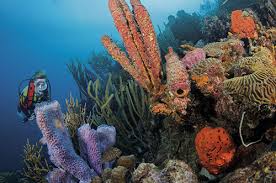
The diving has been sublime. So easy. So tranquil. It is difficult to describe the sensation of breathing underwater. Once buoyancy is figured out, gravity is mostly gone and you feel weightless. It's the closest thing to space travel I will ever need. The effortless movement, a flick of the fin, a wave of the hand, and your facing a new direction. Also, adding to the Bonaire ease is 82 degree water that doesn't require a wetsuit.

Breathing underwater means limited sensory input. Smell and taste are mostly gone. Underwater, you hear only the sound of your breathing through the regulator and your bubbles. There is the occasional scraping of a parrotfish on coral and the snaps of a mantis shrimp, but other than that, the teaming life of a coral reef happens without a lot of auditory stimulus available to our ears over the dominant sound of breathing.

Giant anemones always house an interesting find.
A cleaning shrimp in this case. A fish can pull up
and signal to be cleaned, parasites be gone! 
Visually, all the eye candy is outrageous. Where to look first? Poking along the reef and looking through cracks and crevices in the reef for surprises: maybe octopus, odd fish behavior, an eel, you just never know what might show. Then the constant swish out of the corner of the eye distracts you away and onto something else. Some of the outrageous colors and shapes move while others stand still and hope you won't see them. All the while remembering to look out from the reef to see the turtle, tarpon or ray that might happen to swim by. Everywhere so much to look at with millions and millions of living beings within my field of vision. They may be very simple life forms like a coral polyp but the additive factor is stupendous.

So 12/5, we dropped off our rental car at Bonaire's Flamingo Airport. This rather well-used island ride dutifully served as our dive boat as well, taking us to the twenty plus dive sites that we visited out of the over 100 around the island. We did the easy diving and returned to our favorites multiple times. Now we are in Atlanta visiting LuAnne, collecting our things and preparing for the cross country drive. We need to be on Vashon by 12/16 to take our wonderful house sitters, Dan &Matt to the airport and settling back into our house until 12/29, then we fly to Aukland, New Zealand on January 7th. The fish and flamingos seem a long way from here and such is the hard part of travel, when you have to leave those really sweet spots. Savor and move onward. In the meantime, there's always hotel swimming pools for breathing underwater.